
Accessible Home Foods That Lower Blood Pressure!
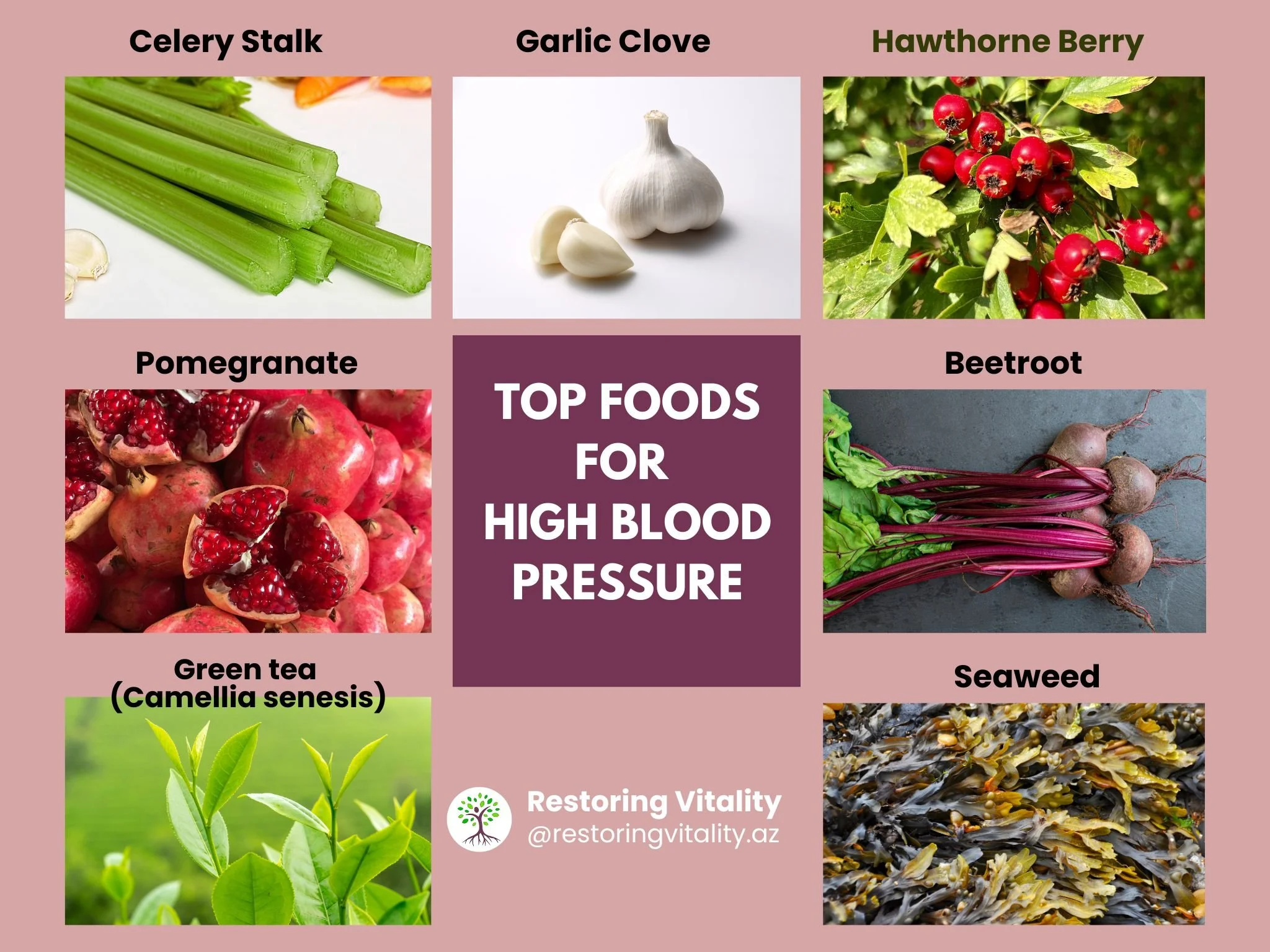
Blood pressure is a key metric for the health of your whole body, from the heart to the eyes to the lungs and kidneys. So, it makes sense to keep your blood pressure happy! While medications are sometimes necessary, did you know you can do a lot just by sneaking in certain foods?
You've probably heard of “Food as Medicine”. It's a phrase passed down over generations. Our ancestors didn’t have the pharmaceuticals we have today, so how did they stay healthy? Here are some of the top foods that help lower pressure that our ancestors (and modern research) have proven and passed down to us.
Celery (Apium graveolens)
Inexpensive, low-calorie, and great in soups!
Celery and celery seed extracts contain 3-n-butylphalide which are responsible for characteristic odor of celery and many of its health benefits. It is a gentle diuretic, which encourages urination and lowers blood pressure (1).Celery is high in fiber and potassium; therefore, it benefits the gastrointestinal good bacteria, which also support healthy blood pressure.
Also has antioxidant and nitric oxide support. Nitric oxide directly dilates (opens) blood vessels, which lowers the pressure.
Celery can also lower blood pressure by blocking aortic ring contraction and dilating the blood vessels in the aorta (the biggest blood vessel in the body and attached to the heart) (1).
Garlic (Allium sativa)
Delicious and used in foods across many cultures, garlic was once considered so valuable for health and flavor that it was used as currency!
Garlic’s main active compound, “allicin,” has many benefits, including antimicrobial, anti-inflammatory, hypercholesterolemic, and antioxidant properties (2). Allicin is released when garlic cloves are crushed, chopped, or chewed.
Garlic supports macrophages, our bodies’ janitors, helping them clear blood vessel walls of cholesterol and plaque! This helps reduce hardening of the arteries, a major concern in high blood pressure.
Studies suggest that aged fresh garlic and garlic extract may reduce blood pressure by 7-16 mmHg (systolic) and 5-9 mmHg (diastolic) (2). That's enough to measurably reduce your stroke risk by up to half! (Depending on other risk factors)
Garlic has the ability to regulate nitric oxide (relaxes and opens blood vessels), and acts as an ACE inhibitor and Calcium Channel Blocker.
Hawthorn berry (Crataegus species)
Known through tradition to be a powerful (but tasty) remedy associated with the heart, both physically and emotionally.
Hawthorn berry extract has been used for centuries for the treatment of high blood pressure, Congestive Heart Failure, and other cardiovascular diseases.
Facilitate relaxation of blood vessels, smooth muscle tone, and blood pressure.
This plant has multiple health components: bioflavonoids (i.e., quercetin) and oligomeric proanthocyanidins (3). Quercetin is an antioxidant and anti-inflammatory that relaxes blood vessels. It has the added benefit of stabilizing mast cells, reducing inflammation from that section of the immune system.
Multiple studies show that taking hawthorn extract for 10 weeks in mildly high blood pressure subjects revealed a reduction in diastolic pressure by 13 mmHg (4). That's nothing to sneeze at!
Pomegranate (Punica granatum)
It's a tradition in some parts of the world to share a pomegranate with someone you love over special holidays or anniversaries. Don't like peeling them? Many of the health benefits still come from the juice alone!
High in antioxidants, especially polyphenols that help reduce arterial plaque and enhance blood vessel health.
Regular consumption of pomegranate or pomegranate extract has shown a significant reduction in both systolic and diastolic blood pressure in studies (5).
Pomegranate juice may attenuate atherosclerotic plaques in carotid stenosis (5). Plaque is a long-term issue; rather than just relaxing the blood vessels today, preventing or removing plaque can help your health long-term!
Has weak ACE-inhibiting (stopping) action. ACE stands for angiotensin-converting enzyme, so stopping ACE makes your blood vessels less tense and lowers blood pressure (5).
Beetroot
Pass the beets! Beets were eaten much more regularly in former days, and perhaps they should make a comeback!
Beetroots also support nitric oxide, which (as you know by now!) enhances the dilation of the blood vessels and improves blood flow and pressure.
Studies have shown that beetroot juice can reduce systolic and diastolic blood pressure. A meta-analysis found that beetroot juice supplementation was associated with a significant reduction in systolic blood pressure by approximately 4-5 mmHg (6).
Consuming fresh beetroot has been linked to a moderate reduction in blood pressure and improved endothelial function.
Beetroot supplements also provide dietary nitrates and have shown similar effects in lowering blood pressure, though studies emphasize that benefits for beetroot or juice offer the best support (6).
Green Tea (Camellia sinesis)
Adding things to your salads and soups sounds a little bit hard? Here's one that doesn't require any chewing at all!
Green tea is derived from the plant Camellia sinesis and is consumed in various forms, including green, black, or Oolong tea. However, many potential health benefits have been associated with the consumption of green tea. Black tea has been processed and may not be that healthy at all.
One of the key components in green tea is the catechin epigallocatechin-3-gallate (EGCG) (7). Catechins are a group of natural compounds with antioxidant properties, and EGCG is quite potent and, luckily, is also the most abundant catechin in green tea!
Green tea catechins also support endothelial function, which helps maintain healthy blood vessels.
Green tea also possesses anti-inflammatory properties. Chronic inflammation is linked to various health conditions, including high blood pressure; therefore, the anti-inflammatory effects of green tea may help support healthy blood pressure.
Sea vegetables
It's always fun to change up the diet! Perhaps a sea-plant-food week is in order?
Seaweed is low in calories and high in nutrients, especially calcium, iron, copper, vitamin A, B, C, and E (8).
Seaweed is high in fiber, which helps the gastrointestinal tract by promoting metabolic regulation. Healthy GI and microbes are associated with improved blood pressure.
Wakame seaweed (Undaria pinnatifida) is the most popular edible seaweed in Japan. A daily dose of 3.3 g dried wakame for four weeks significantly reduced blood pressure (9).
These are all awesome foods to add to your blood pressure health regimen! In very mild cases, it might be enough, but talk to your doctor. You may need to continue taking your medications or have additional natural support. We would be happy to have that conversation about further natural options that suit you in our clinic!
In certain individuals, they may also have other underlying health issues such as high cholesterol, hormone imbalance, obesity, sleep apnea, chronic stress, or thyroid issues. These underlying health issues need to be addressed before treating high blood pressure.
At Restoring Vitality, Dr. Paw Kamwee approaches high blood pressure, aligning with our ancestors. Starting with lifestyle interventions before medications is often an integrative and holistic starting point. This can look like adding a healthy diet, daily physical activity, managing stress and anxiety, and plant medicines and supplements to manage and further support overall health.
We hope this has been helpful, and we look forward to talking with you if you're curious about further options.
Be sure to check out Dr. Paw Kamwee's BP TOP herbs here: https://us.fullscript.com/plans/dr-pawkamwee-at-restoringvitality-top-high-blood-pressure-hypertension-support-herbs
References
Houston M. C. (2005). Nutraceuticals, vitamins, antioxidants, and minerals in the prevention and treatment of hypertension. Prog. Cardiovasc. Dis. 47, 396–449. 10.1016/j.pcad.2005.01.004
https://pubmed.ncbi.nlm.nih.gov/26764327/
Asher G. N., Viera A. J., Weaver M. A., Dominik R., Caughey M., Hinderliter A. L. (2012). Effect of hawthorn standardized extract on flow mediated dilation in prehypertensive and mildly hypertensive adults: a randomized, controlled cross-over trial. BMC Complement. Altern. Med. 12:26. 10.1186/1472-6882-12-26
Walker A. F., Marakis G., Morris A. P., Robinson P. A. (2002). Promising hypotensive effect of hawthorn extract: a randomized
(Phytother Res. 2024;38(5):2234-2248) (Antioxidants (Basel). 2022;11(11):2124)
NFS Journal 21 28-37 Nutrients. 2019;11(8):1806
https://www.mdpi.com/1420-3049/30/15/3128
https://pubmed.ncbi.nlm.nih.gov/18236692/
https://academic.oup.com/nutritionreviews/article-abstract/65/12/535/1903132?redirectedFrom=fulltext&login=false